Readable controls
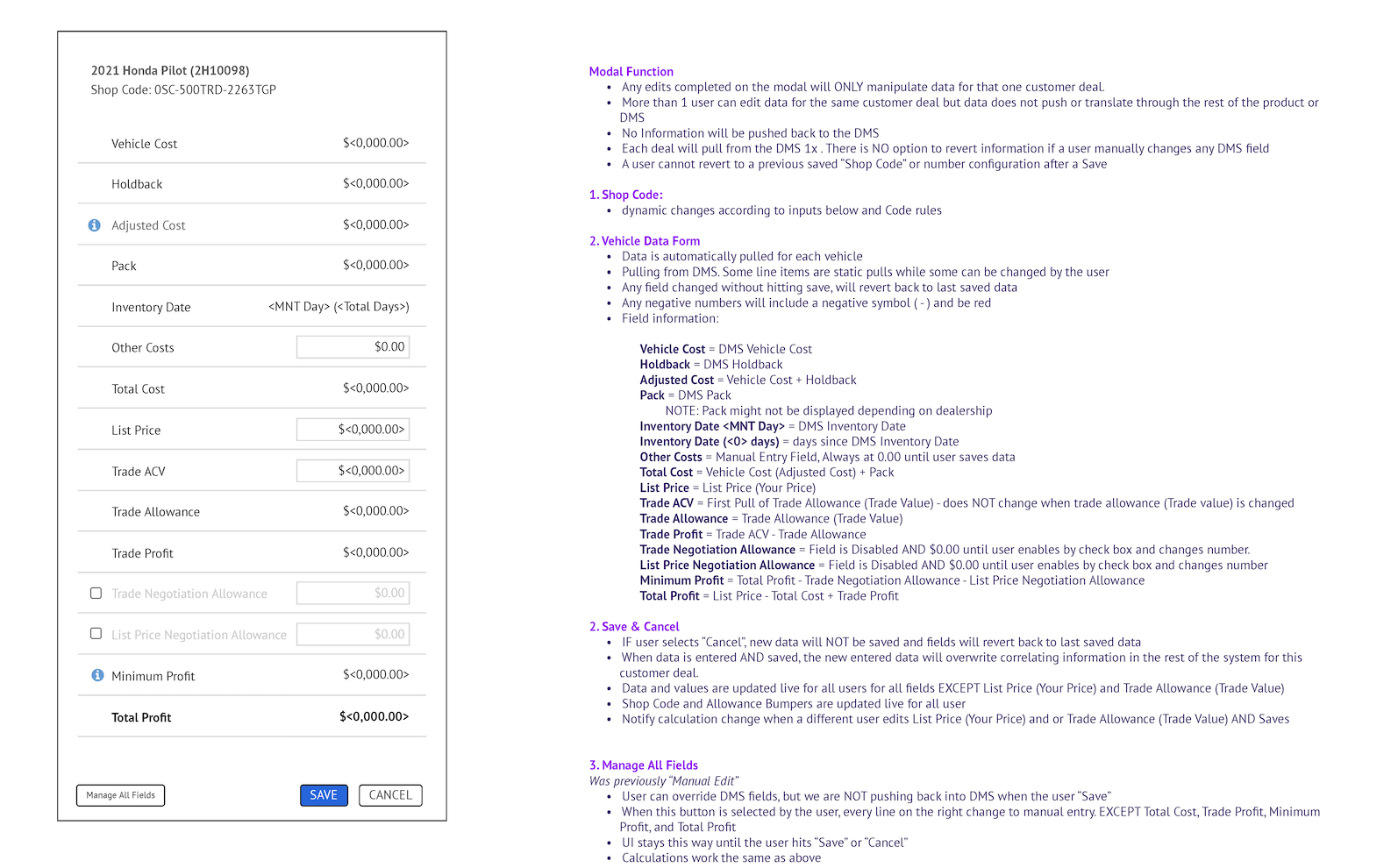
Only a manager with the correct access could open the modal, review profit, and set negotiation limits.
A2Z Sync · Automotive Retail
I designed and shipped A2Z Sync’s first negotiation tool, allowing advisors and managers to work within the same deal without forcing the advisor to leave the customer.
01 · The market limitation
A2Z Sync was created for one-price dealerships. Without a way to set negotiation limits and protect profit, the product could not support dealerships that negotiated vehicle or trade values.
02 · Research
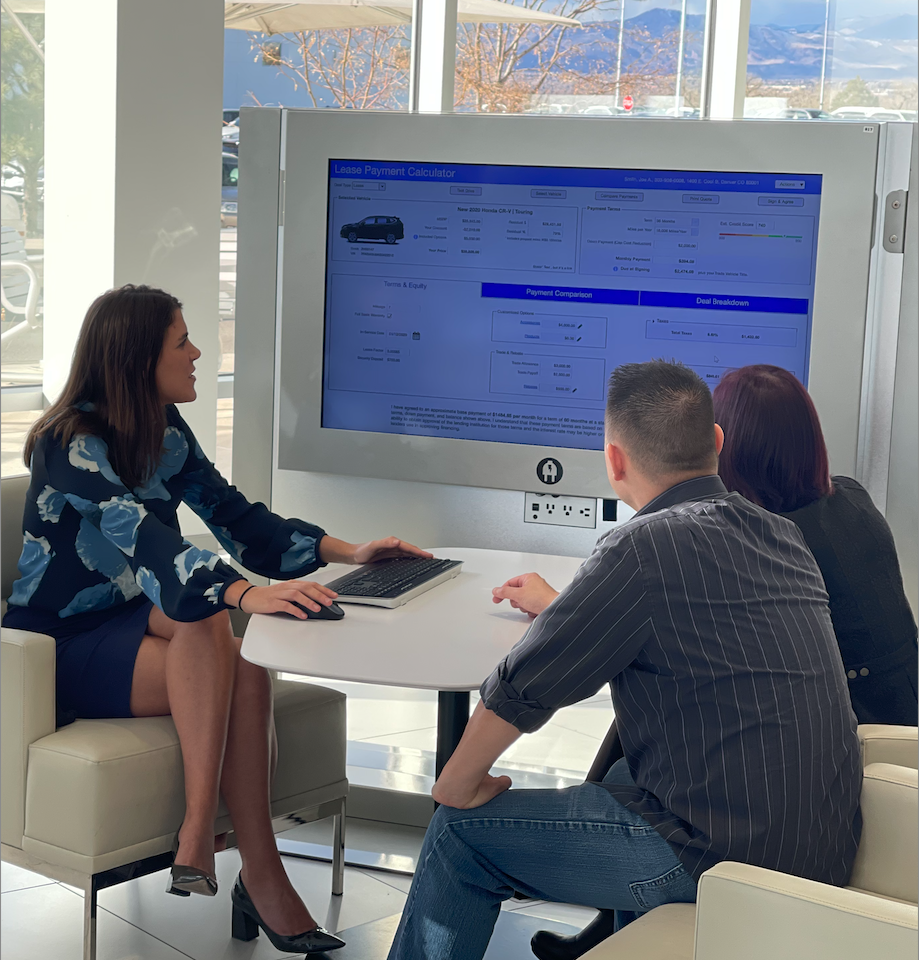
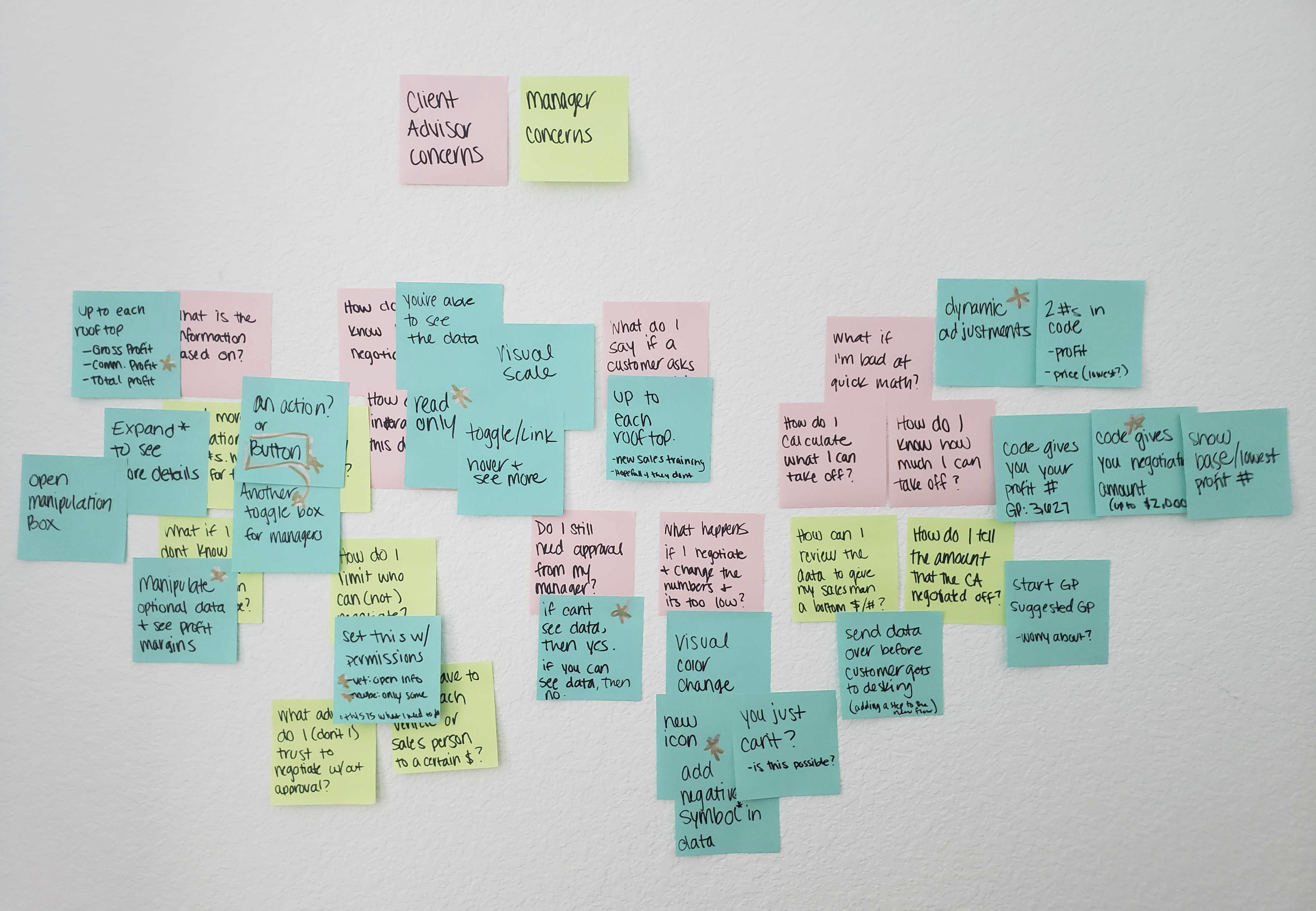
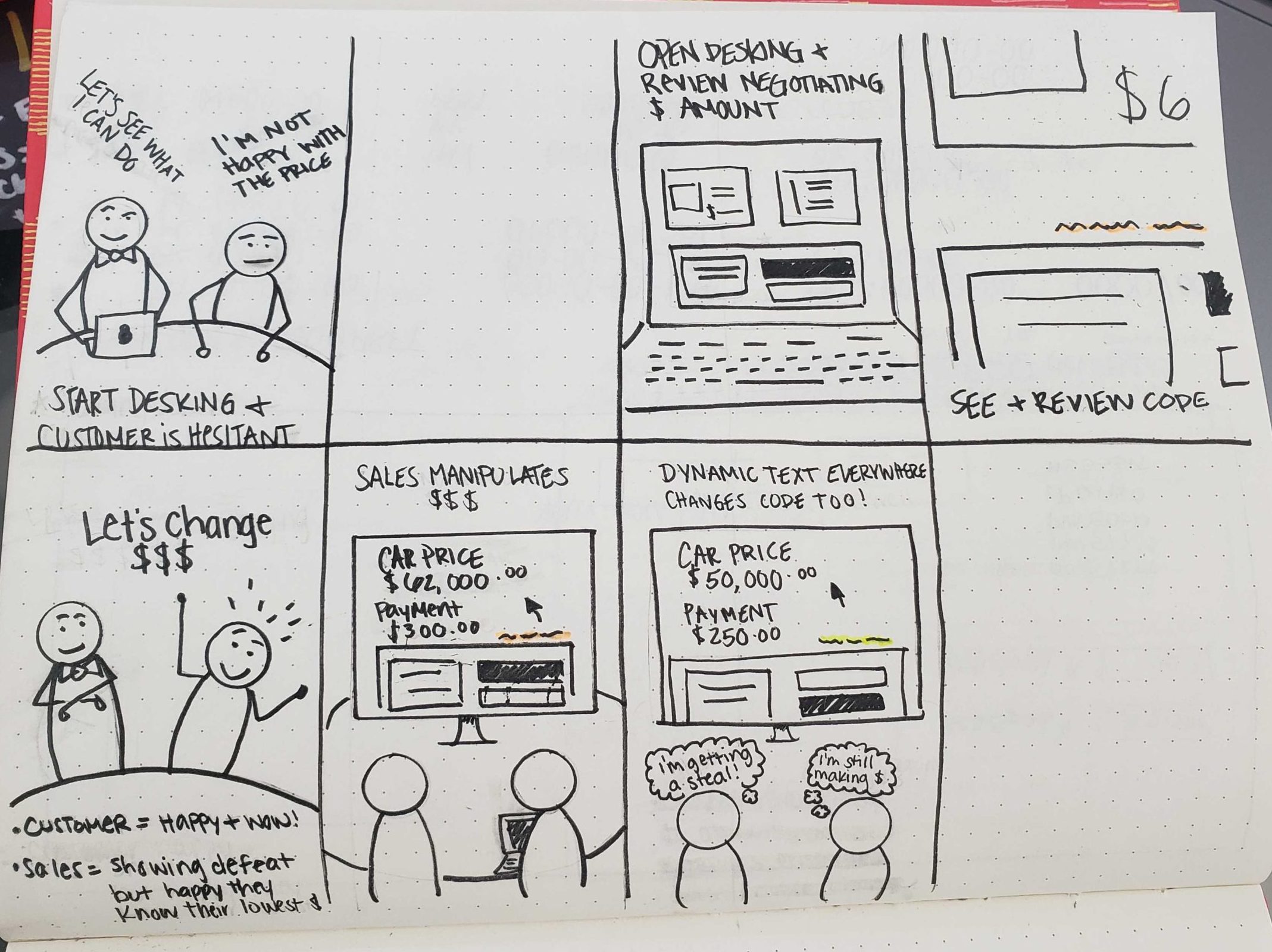
I worked onsite and remotely with dealership managers, financial advisors, and client advisors. Concern mapping, heuristic evaluation, and storyboarding showed that managers needed control without becoming the middleman.
03 · Three major versions
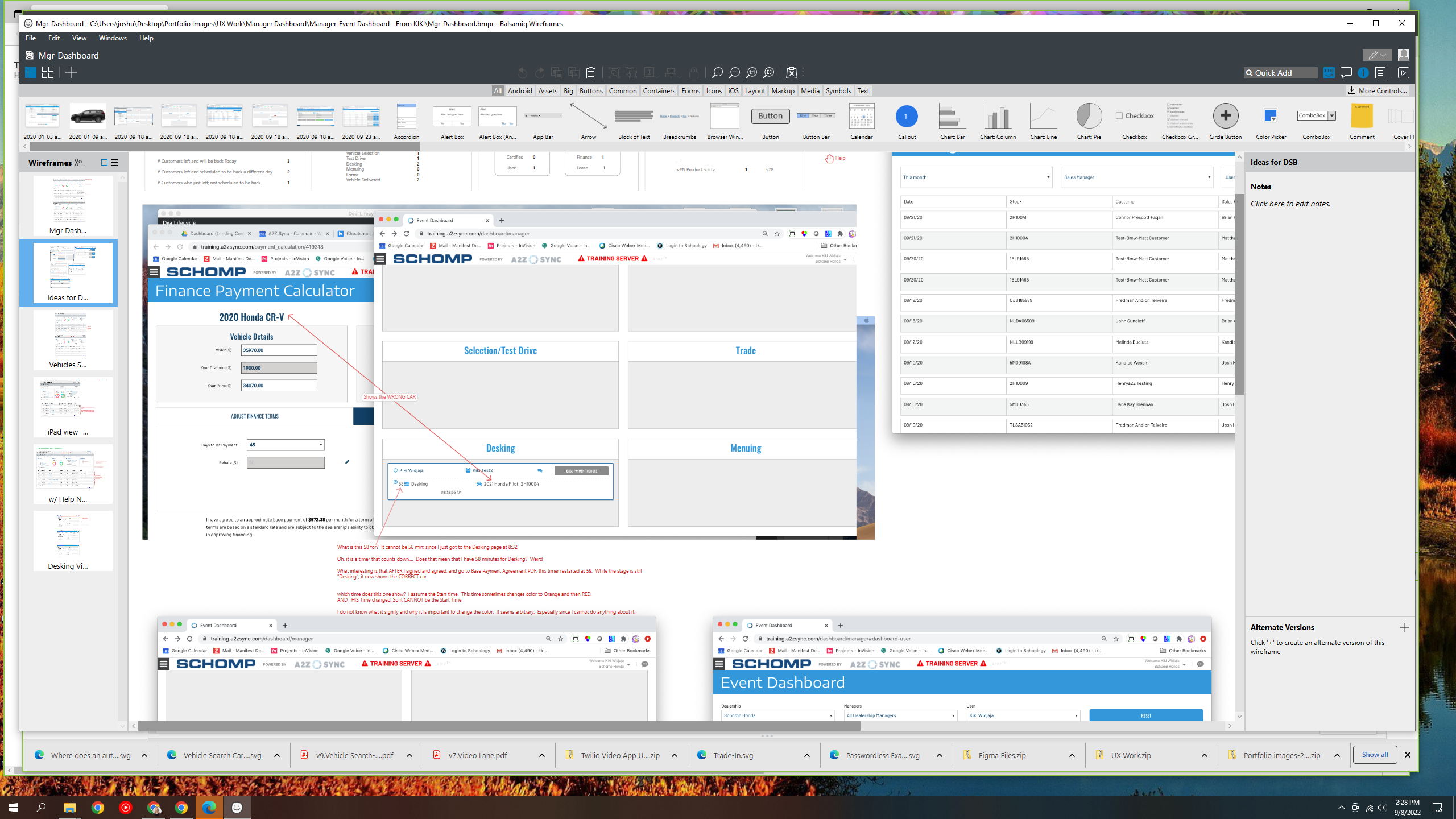
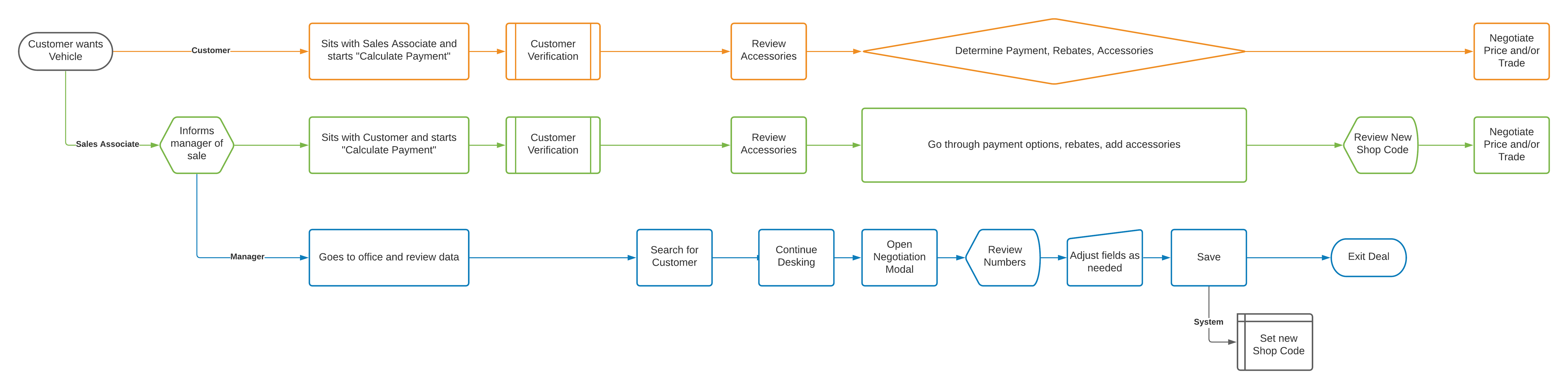
We completed three major design versions before piloting the product with dealership staff.
04 · The final system
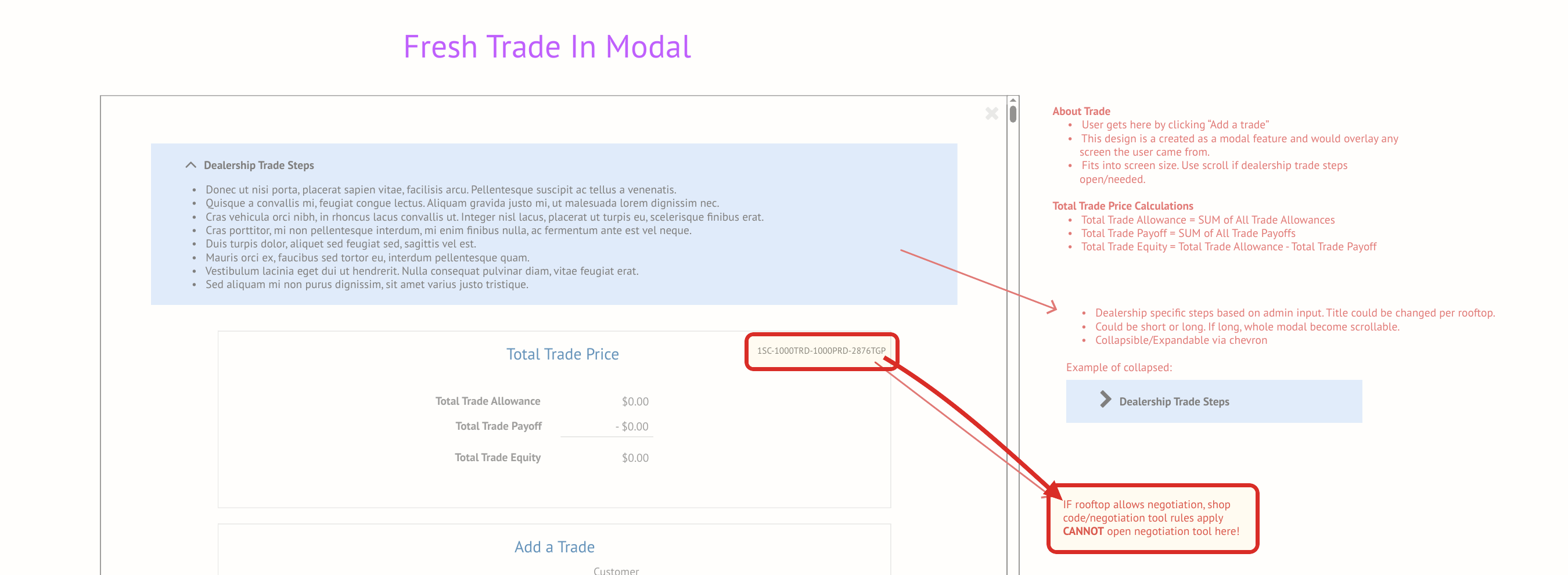
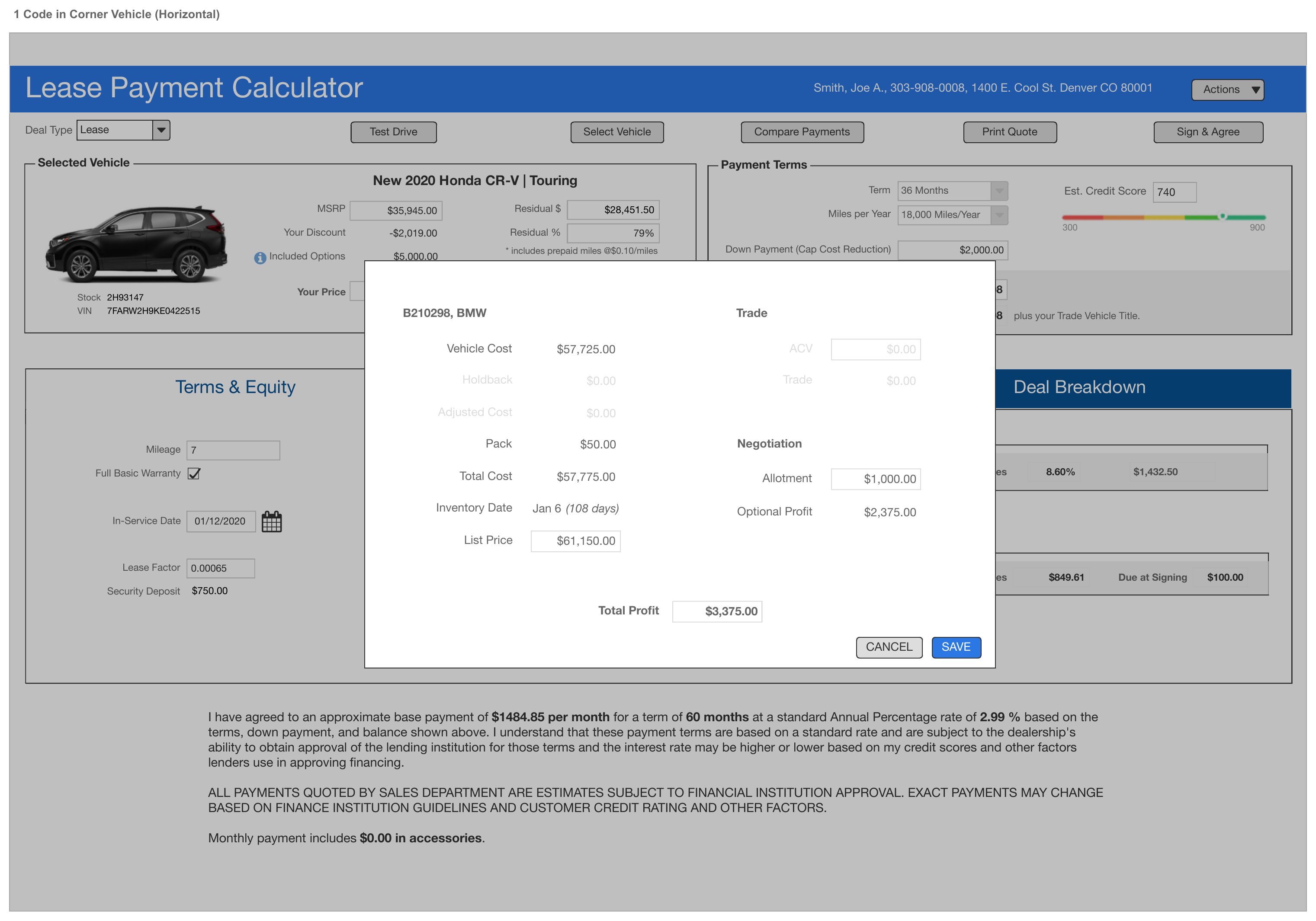
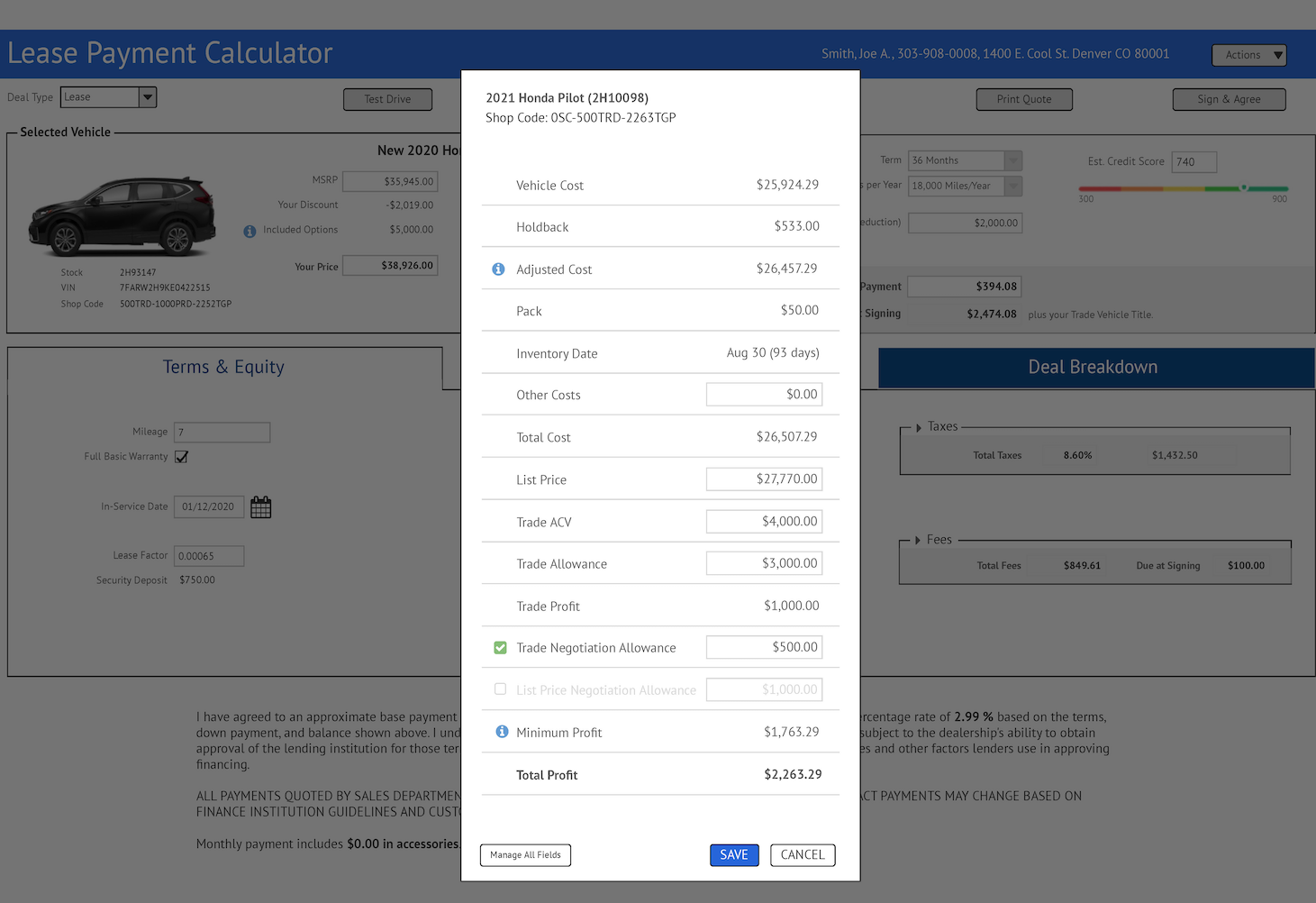
Authorized managers set trade and vehicle-price limits inside a readable modal. Client advisors saw a coded summary on the customer-visible dashboard and could negotiate within those limits without leaving the customer.
Video playback may vary by browser. If it does not load, the final interface screenshot is displayed instead.
Only a manager with the correct access could open the modal, review profit, and set negotiation limits.
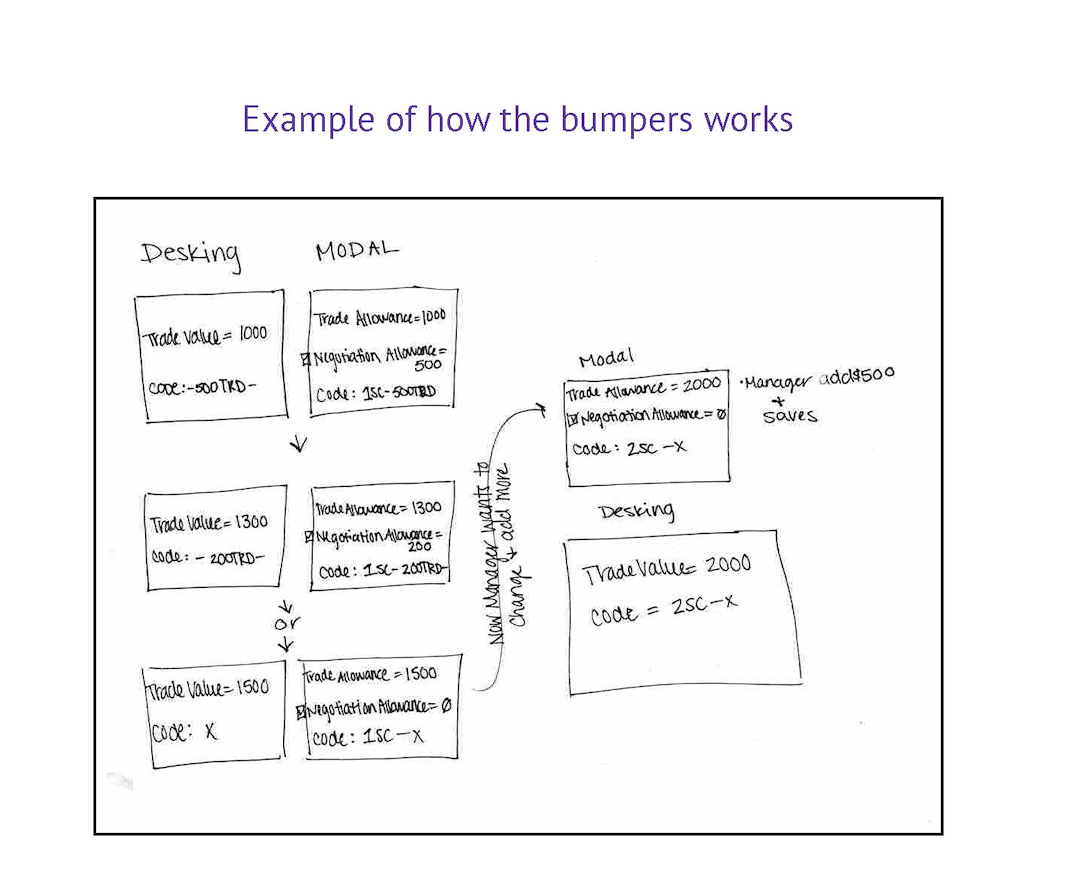
The dashboard code showed the advisor their room without exposing sensitive profit information to the customer beside them.
05 · Designing the rules
I defined the calculations, DMS field mapping, shared updates, save behavior, negotiation limits, and negative or zero states. The Lead Engineer helped adapt the concept to existing backend constraints.
Each deal pulled from the DMS once. Manual changes stayed with that customer deal and were never pushed back to the DMS.
More than one user could work in the deal. Saved limits and shop codes updated across users, with notifications when key values changed.
Advisors could negotiate only within enabled allowances. Invalid changes reverted, while negative and zero-profit states followed explicit code rules.
06 · Outcome
The negotiation tool reached production in four months and was used daily by at least four locations. It reduced the manager’s role as a middleman and enabled A2Z Sync to support negotiating dealerships.
Dealership staff said the code was discreet enough for a customer-visible screen and clear enough for advisors to understand without a tutorial. It also gave new advisors a simple way to see how changing one number affected the rest of the deal.
07 · Leadership takeaway
Connecting dealership behavior, A2Z Sync’s business model, and an existing system capability turned one dealership request into a product capability that enabled market expansion.