01 · What had failed
The first version stopped before the work was actually done.
The original Connected Email created a draft in DAT, but it was not connected to the dispatcher’s inbox. They still had to copy the message into email before they could send it. Early production use showed extremely low adoption.
02 · The problem we had missed
Dispatchers did not need a better draft. They needed to stay in their flow.
Paid plugins worked because they pulled load details into an email and let dispatchers act quickly. My later research with dispatchers showed why that mattered. They managed 7 to 13 trucks while moving between DAT, spreadsheets, broker boards, email, and phone conversations. Copying a draft into another email tool still added work.
Research that informed the rebuild
03 · Changing the constraint
The product needed a connection, not another workaround.
I reopened the direct email connection question with product, security, and backend engineering. We found a secure way for users to connect Gmail or Outlook and send from their own account. DAT could keep the load context in the flow without reading or storing the email itself.
Verified broker email
Do not let users type or pull an address from load comments. This helped prevent fraud.
User’s own account
Gmail or Outlook sends the message. DAT does not store it.
Load details included
Users do not have to copy and paste the load information into an email.
04 · What shipped
An email with the work already done.
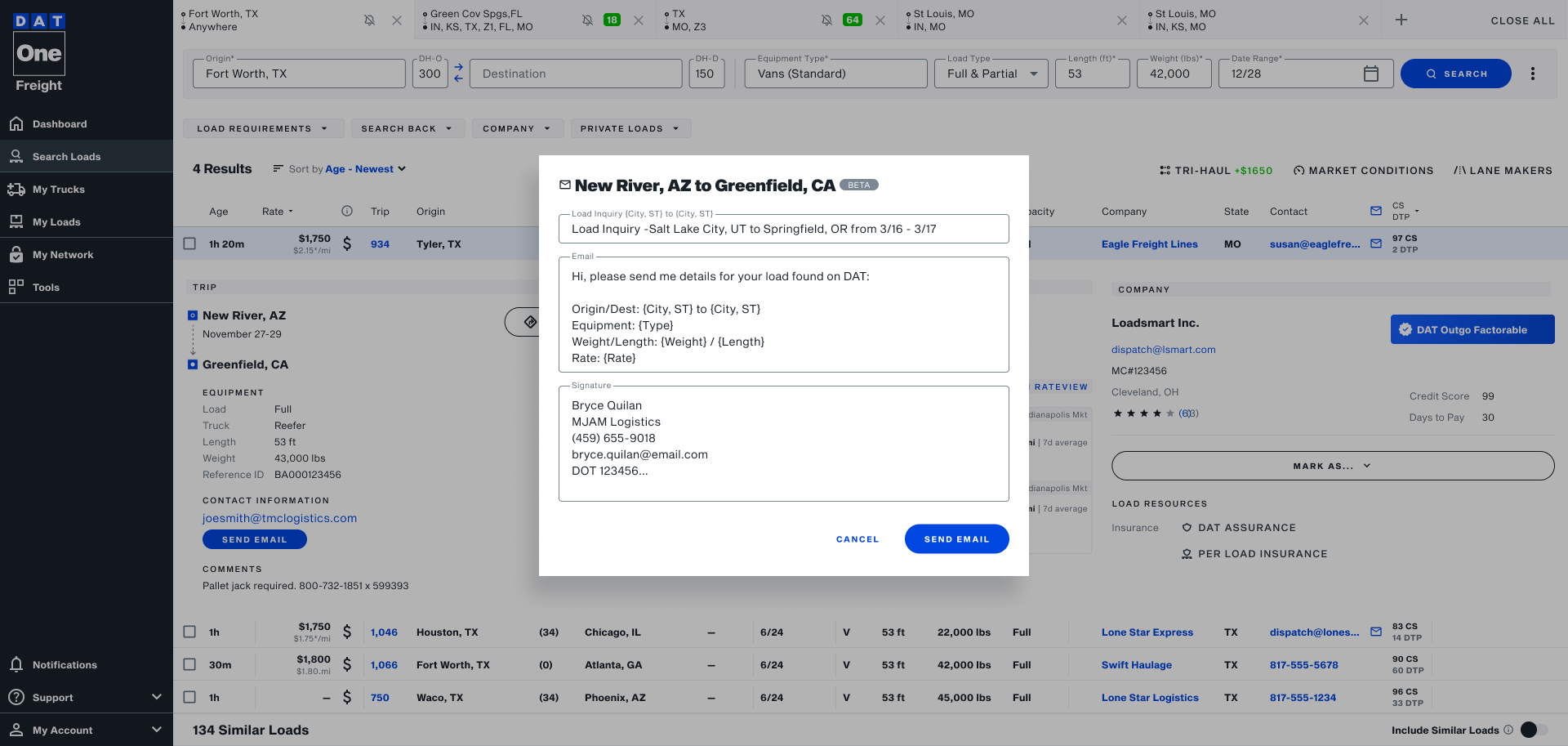
Users could connect Gmail or Outlook from DAT One. From a load row or the load details, they could open an email with the broker and load information already included. They reviewed it, then selected Send from their own email account.
05 · Designing around trust
Speed only worked if users could trust it.
The PM, engineering, security, and I worked through the connection approach together. I brought the dispatcher research into those conversations and helped make sure the product protected users without adding work back into the flow.
Fast sending
Pre-filled load details removed repeat work while leaving users a clear review step before sending.
Verified information
The flow used the broker email tied to the load instead of an address copied from comments.
Account security
The connection let Gmail or Outlook send the message without DAT reading or storing the email.
06 · Release, then listen
Live use showed we solved the first problem. Feedback pointed to the next one.
These were early production signals, not a full outcome study. They showed that direct account connections removed the main reason the first release was not used.
Strong response volumeUser feedback
Strongly positiveEarly user sentiment
Image signatures and templatesMost-requested additions
That feedback revealed opportunities for richer composition, reusable messaging, and faster workflows.
07 · Learn from what users told us
The release solved the immediate problem and revealed what mattered next.
Connecting Gmail or Outlook solved the immediate workflow problem: users could open a pre-filled email and send without leaving DAT One.
Users saw opportunities for richer composition, reusable messaging, and faster workflows.
Those insights informed exploration of rich-text editors, templates, and Company Logo support without committing to a specific roadmap.
08 · Leadership takeaway
Research helped us fix the part that had been missed.
I carried the evidence from the earlier plugin research, the dispatcher study, and the failed release into the new work. With the PM, security, and engineering, we changed the underlying product constraint: a draft users still had to move into email became a connected tool they could use in their flow. We shipped it, measured real behavior, and used that evidence to guide what came next.